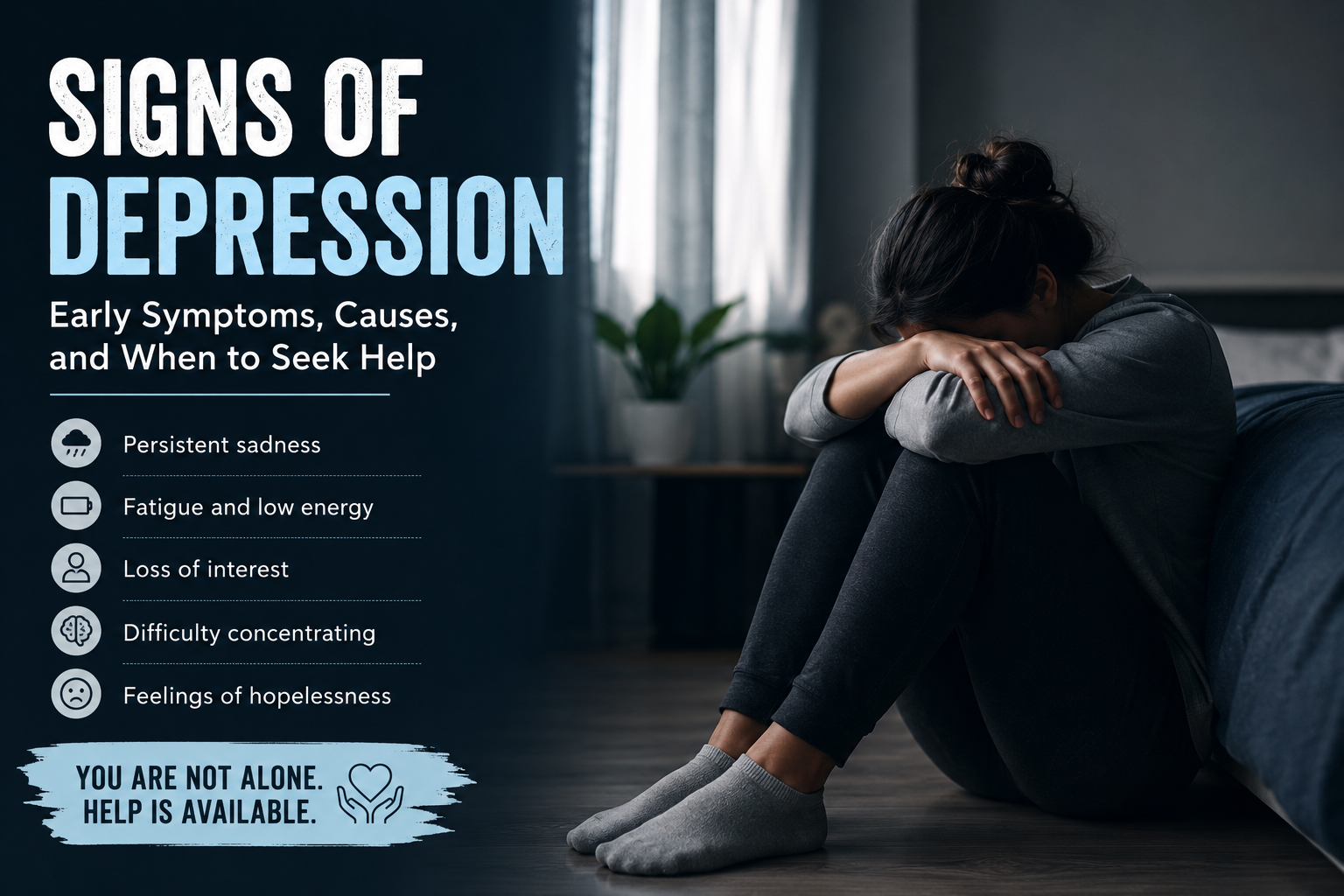
Signs of Depression: Early Symptoms, Causes, and When to Seek Help
Depression is more than occasional sadness or feeling low after a difficult day. It is a serious mental health condition that can affect a person’s thoughts, emotions, physical health, and daily life. Recognizing the signs of depression early can help individuals seek support and treatment before symptoms become more severe.
What Are the Signs of Depression?
The signs of depression can vary from person to person, but they often persist for weeks or months and interfere with daily activities. Common symptoms include:
1. Persistent Sadness or Low Mood
One of the most common signs of depression is feeling sad, empty, or hopeless for most of the day, nearly every day.
2. Loss of Interest in Activities
People experiencing depression may lose interest in hobbies, social activities, work, or other activities they once enjoyed.
3. Changes in Sleep Patterns
Depression can cause insomnia, difficulty staying asleep, early morning awakening, or excessive sleeping.
4. Fatigue and Low Energy
Feeling constantly tired, even after adequate rest, is another common symptom of depression.
5. Difficulty Concentrating
Individuals may struggle to focus, remember information, or make decisions.
6. Changes in Appetite and Weight
Some people experience increased appetite and weight gain, while others may lose interest in food and experience weight loss.
7. Feelings of Worthlessness or Guilt
Excessive self-criticism, guilt, or feelings of worthlessness are often associated with depression.
8. Social Withdrawal
Avoiding friends, family, and social situations can be a significant warning sign.
9. Physical Symptoms
Depression may also present as unexplained headaches, digestive problems, body aches, or chronic pain.
10. Thoughts of Self-Harm or Suicide
In severe cases, depression may lead to thoughts of self-harm or suicide. Immediate professional help should be sought if these thoughts occur.
What Causes Depression?
Depression can result from a combination of factors, including:
- Genetic predisposition
- Brain chemistry imbalances
- Chronic stress
- Traumatic life events
- Medical conditions
- Substance abuse
- Social isolation
When Should You Seek Help?
If the signs of depression persist for more than two weeks and begin affecting work, relationships, or daily functioning, it is important to seek professional support. Early diagnosis and treatment can significantly improve recovery outcomes.
Treatment Options for Depression
Treatment may include:
- Cognitive Behavioral Therapy (CBT)
- Counseling and psychotherapy
- Medication prescribed by a psychiatrist
- Lifestyle modifications
- Stress management techniques
- Regular exercise and healthy sleep habits
Conclusion
Understanding the signs of depression is the first step toward getting help and improving mental well-being. Depression is a treatable condition, and seeking support from mental health professionals can make a significant difference. If you or someone you know is experiencing symptoms of depression, don’t hesitate to reach out for help.